Commercial spaces do not arrive ready to work. They arrive as shells, almost-workable suites, or hand-me-down layouts that fit the last tenant’s needs more than yours. The fastest way to turn that near-miss into a dialed-in workspace is a design-build approach to electrical. One team takes responsibility for the plan and the install, keeps the budget honest, and solves problems before they appear in the field. When you are on the clock with lease payments ticking and stakeholder patience thinning, that matters.
I have walked into plenty of tenant improvements that sounded simple in the kickoff meeting. Move a few circuits, hang lights, add a conference room, maybe some EV charger installations for the small fleet, and call it a day. Then the walls open up and the reality show begins. The existing panel has no room, the feeder to that subpanel is undersized, the lighting control has a mind of its own, and half the junction boxes look like they were installed on a Friday at 4:45. This is where an electrical design-build contractor earns their keep.
Design-build for tenant improvements, in plain language
Design-build means one party designs the electrical system and installs it. No baton pass between a separate engineer and low-bid installer, no finger pointing, fewer change orders. You get one accountable team to carry the project from concept sketches through inspections and turnover. On tenant improvements, the benefits compound because existing conditions can ambush even the best paper plans. When the team that drew the plan is the same team holding the conduit, field adjustments become clean, documented decisions, not delays.
The milestones stay the same across most projects. Program the loads and use-cases with the client. Survey the site to verify what’s actually there. Draw preliminary plans and a demo scope that puts the mess in reverse. Coordinate with building management and the local authority having jurisdiction. Then finalize drawings, pull permit, stage materials, and build. Commissioning closes the loop, and a smart design-build team will hand over training, as-builts, and an electrical maintenance plan that matches how the space will be used.
Why tenant improvements are a different animal
Ground-up construction gives you a blank slate. Tenant improvements are archaeology. You inherit someone else’s choices: the old load centers, the mixed-age wiring, that surprise junction in the ceiling grid. You can’t wish away constraints. You must work with them, or around them, without breaking budget or schedule.
Three realities define the work.
First, occupancy never fully pauses. A commercial electrician in an active building dances around neighbors, quiet hours, and deliveries. Sawing unistrut at 10 a.m. when a law firm is deposing a witness will not win friends. Planning and communication matter more than brute horsepower.
Second, code interpretation has local nuance. That open ceiling plenum that passed five years ago might now need different cable types or spacing. Lighting power density rules shift with energy codes. Accessibility requirements touch controls, signage, and device heights. A design-build partner anticipates the inspector’s lens, not just the customer’s wish list.
Third, the electrical backbone is either your ally or your limiter. If the main service is tapped out, your cool new workspace plan hits a wall. Good teams test, measure, and verify. The fastest way to blow budget is to dream in 3D without peeking behind the panel cover.
A first walk-through that matters
Real field notes beat glossy renderings. During the earliest walk-through, I bring a thermal camera, a clamp meter, a flashlight that can blind a raccoon, and a sense of humor. We pop panels and count spaces, verify feeder sizes, trace abandonware, and map critical loads. If there is a home generator installation shared by the building, we check how the life-safety circuits are isolated. If there is a solar panel installation on the roof feeding a house meter, we determine how tenant submetering actually works.
This early reconnaissance catches deal breakers. On one project, the client wanted a maker space with a dozen 240-volt tools. The existing tenant panel looked adequate on paper. A clamp meter told a different story, with phase imbalance and steady high draw from a data room next door fed by the same service. We reworked the plan, added a dedicated subpanel, and balanced the phases. That small pivot saved weeks of rework and a handful of expensive change orders.
Load calculations without the hand waving
Tenant improvements live or die by accurate load calcs. Conferences rooms lie about their actual use, kitchens hide hungry toasters, and offices underestimate the pile-on effect of small devices. We model the worst-case clusters and then reality-check them with diversity factors that match the business. A marketing firm does not pull like a gym. A dental clinic does not breathe like a design studio with 3D printers. If the space plans to add EV charger installations in the parking area, we integrate managed charging to avoid oversizing the service. The goal is right-sized infrastructure, not a museum-grade overbuild.
Surge protection installation is another area where judgment pays off. Whole-panel protection at the main and subpanels costs less than replacing a rack of sensitive electronics, and it plays nicely with power quality issues in older buildings. Smart choices keep systems alive when a storm or an upstream switching event hits.
Lighting that flatters work, not headaches
You can spot a tenant improvement that treated lighting as an afterthought. The space hums along with mismatched color temperatures, glare on screens, and a row of downlights roasting one conference table while the back wall stews in shadow. Good lighting design starts with tasks and sightlines. We set the base layer with high-efficiency fixtures, usually LEDs with reliable drivers, then add accents where people present, collaborate, or need contrast. Controls matter more than anyone expects. A blend of vacancy sensors, daylight harvesting where the architecture allows it, and simple scene control goes a long way.
Err on the side of intuitive. If staff need a manual the size of a phone book to dim the lights, the system gets bypassed, and your savings vanish. Smart home https://jsbin.com/puyupikogu device installation ideas have crossed into commercial spaces, but not every office needs an app for every switch. Use them where they remove friction. For example, a central dashboard in a reception area that can set “After Hours,” “Client Visit,” or “Workshop” scenes is worth it. Fifty app-linked light switches with different firmwares is chaos.
Power and data symmetry, the unsung hero
Few things tank productivity like a beautiful office with nowhere to plug in. Tenant improvements need symmetrical power and data distribution that respects the furniture plan. Floor boxes where tables live, wall outlets placed to avoid cord spaghetti, and plenty of USB-C where people actually sit. That means walking the plan with the furniture vendor, not guessing.
On a coworking build-out, we added two extra floor boxes per bay after the furniture spec changed in the eleventh hour. That simple change let operators reconfigure desks without extension cords that would have turned into trip hazards. It also saved them money by letting the janitorial team clean efficiently, because vacuums actually had outlets within reach. These are the quiet wins that keep a space feeling competent.
Special systems that pull their weight
Smoke detector installation sits in a different category from convenience devices. Life-safety systems integrate with the building’s fire alarm backbone, elevator recall controls, and emergency egress lighting. A tenant improvement needs clean separation between base building systems and tenant-responsible devices. Do not improvise here. If the building’s panel uses addressable devices from a specific vendor, stick with that ecosystem. Mixing and matching leads to nuisance alarms and unfriendly inspector visits.
Smart thermostat installation looks simple compared to fire systems, but still requires careful integration. In multi-tenant buildings, base building HVAC logic can conflict with local controls. We coordinate with the mechanical contractor to ensure the electrical feed, low-voltage wiring, and control sequences play nicely. If a landlord is using after-hours energy recapture or has strict schedule windows, the thermostat must not become a cowboy.
Security and access control add another layer. Power supplies for strikes and readers sit on standby 24/7. Battery backup is a must. Clean cable routing and labeled terminations make future troubleshooting a 10-minute job instead of a lunchtime odyssey.
When sustainability meets practicality
Solar panel installation on tenant spaces is not always straightforward, since roof rights and meters typically sit with the landlord. But tenants can still push toward sensible efficiency. LED lighting with tuned controls, efficient transformers, occupancy-driven plug load controls, and a commissioning pass that actually calibrates sensors. For some clients, adding submetering to track specific zones changes behavior more than any poster about saving energy. People respond to numbers they can see.
EV charger installations deserve careful planning. In shared garages, we negotiate capacity with the building. Most times, load management software lets us install more ports than the raw amperage might suggest by throttling dynamically. It keeps the driver experience good without a panel upgrade that costs more than the lease. We design for maintenance too. Good cable management reduces trip risk and keeps cords alive longer. Networked chargers need reliable data paths, so we plan conduit for both power and communications, not a last-minute wireless bandaid that dies in concrete.
The service gear you cannot afford to ignore
Panels, switchgear, and feeders are the bones of the system. On tenant improvements, we check age, listing, and compatibility. Some panels became orphan products after mergers or obsolescence. Replacement breakers exist in theory but not in the warehouse. A design-build approach flags these early, builds a plan for swap-out or retrofit, and aligns the shutdown with the landlord’s schedule.
I am a fan of labeling that assumes future chaos. Every feeder, every circuit, every receptacle that ties to a critical system gets a label that survives cleaning solvents and time. During emergencies, people do not read fine print. They look for obvious clues. Clear labeling and a simple single-line diagram posted near the main gear have saved more than one midnight service call.
Maintenance is part of design
Electrical maintenance services should not start after a failure. They begin in the design phase by selecting gear with good service access, grouping shutoffs where a single tech can isolate a zone, and avoiding hidden junctions that require ceiling archaeology. For clients with sensitive operations, we specify components with known lead times. It is no fun to explain that a broken lighting control module is on a six-week backorder because the only vendor who plays with that ecosystem is on vacation.
Emergency electrical services will always exist, but you can design your way toward fewer of them. Surge protection installation, quality terminations, and periodic infrared scans catch loose connections before they arc. Even simple habits like quarterly panel dusting and electrical vault cleaning in older buildings keep heat down and equipment happier. I have opened vaults that looked like a set for a post-apocalyptic film. Cleaning, labeling, and basic housekeeping reduce unplanned outages, and most building managers appreciate a contractor who treats those spaces with respect.
Safety lives in the details
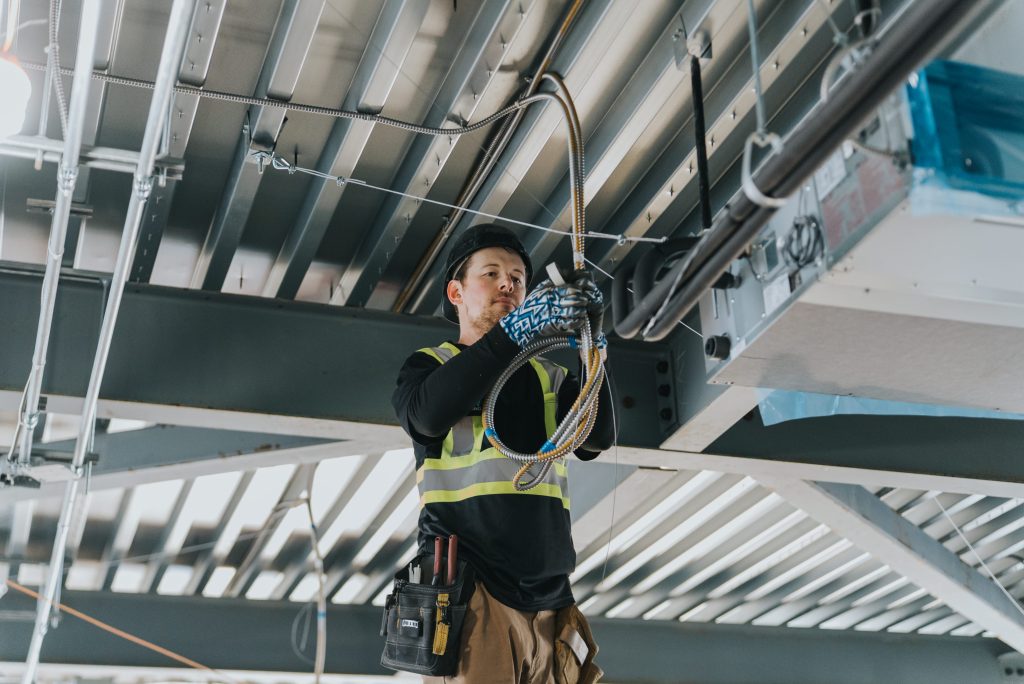
Tenant improvements often mean working above ceilings full of mystery cables, in rooms with poor ventilation, or near sprinklers that don’t love sparks. A commercial electrician who measures twice and guards the workspace keeps people safe and the schedule intact. Barricades around ladders, lockout tagout that actually gets followed, and pre-work briefings that include the property manager. These little rituals are not for show. They keep the project boring in the best way.
For residential tenants moving into mixed-use buildings, a residential electrician lens helps too. Plug loads in micro-kitchens, in-suite laundry circuits, and small appliance needs shift the balance of branch circuits. And if a smart home device installation creeps into the plan, we vet firmware support, security practices, and user training. I have unwound enough “smart” gear that went dumb after an update to be picky.
Cost clarity without the fog machine
Everyone wants certainty. The trick is to be honest about what can be known and what cannot. I prefer budgets that separate the fixed from the contingent. Core scope with firm pricing. Allowances for fixtures the client has not chosen yet. A contingency bucket sized to the age and complexity of the existing conditions. On a clean, recent build, five percent might cover surprises. On a charming brick building from the eighties with DIY scars, budget ten to fifteen. The words “we will see” do not comfort a client. Real ranges with reasons do.
Change orders get a bad name because they often smell like ambushes. A transparent process cures most of that. Before work starts, define what triggers a change, how fast it will be priced, and who can approve it. Then stick to that. When a wall hides a junction zoo and we need to reroute, I show photos, explain options, put costs and schedule impact in writing, and let the client choose. People handle surprises when they feel in control.
A quick story about speed and judgment
A client needed a fast move-in for a suite that would host training sessions. The wish list had everything: new lighting, more receptacles, a Wi-Fi ceiling grid, a coffee bar with two undercounter fridges, smart thermostats, and AV that could change scenes like a theater. The calendar was brutal. We used a design-build approach with TDR Electric, aligning engineering and field crews so procurement started while drawings were still in city review. We pre-assembled lighting grids offsite and kitted hardware by room. We pulled a Saturday shutdown to upgrade a subpanel, coordinated the inspection for Monday, and had drywall closing by Tuesday.

The only hiccup came from a long-lead AV component. Rather than hold the entire schedule hostage, we installed a temporary bridge with a reliable off-the-shelf switch and documented the conversion plan. The client took occupancy on time, trained 40 people that week, and never once had to set a coffee maker on the floor because the outlets were in the wrong place. That felt like a win.
What modern tenants actually ask for
Clients rarely start by naming amps or breaker types. They talk outcomes. Fewer cords on floors. A space that looks great on camera and comfortable to sit in for two hours. Thermal control that does not require a PhD. Quiet background systems that keep their data safe. To translate these into electrical means thinking across systems rather than in silos.
Smart thermostat installation ties to window orientation, schedules, and occupancy sensors. Surge protection installation pairs with a UPS strategy for sensitive racks. Smoke detector installation coordinates with strobes, sounders, and egress lighting that actually leads people out without blind spots. EV charger installations must align with HR policies, parking assignments, and the building’s rules. Even home generator installation shows up in certain ground-floor suites with critical loads. Design-build keeps these threads in one hand.
Retrofit lighting controls that do not go feral
Retrofits present the classic fork: keep existing fixtures and add controls, or replace the lot. If the fixtures are good bones with efficient drivers, a retrofit control option can work well. Wireless controls make sense when conduit pathways are tight or ceilings are historic. The trade-off is radio management and long-term maintenance. Choose ecosystems with proven support and local representation. When a zone fails on a Friday at 5, having a vendor who answers the phone beats a fancy app with a chatbot.
For new fixtures, stick to reputable driver manufacturers. Flicker at low dim levels drives people crazy, and certain LED-driver combos deliver that unpleasant strobe. We bench-test samples, check dim curves, and confirm compatibility with the chosen control protocol. It is extra effort upfront that prevents field headaches.
A note on standards and documentation
Labeled panels, device schedules, and as-builts matter. But the handoff package should also include a one-page quick start for the office manager and a maintenance calendar. Simple items like, “Quarterly: test emergency lighting for 30 seconds,” or “Annually: infrared scan of main and subpanels,” keep the space reliable. And when turnover happens, those documents help the next person avoid reinventing the wheel.
For multi-tenant buildings, we push for consistency across suites. If TDR Electric services several floors, we align on standard breaker types, labeling conventions, and typical details. Future projects get faster and cheaper, and building management appreciates not juggling half a dozen part numbers for spares.
The two checklists I actually keep on a clipboard
Pre-demo field verification
- Open every panel, record breaker counts, spare spaces, and feeder sizes. Photograph labels and terminations. Trace critical circuits for life safety and shared systems to avoid accidental outages. Verify ceiling plenum type, fire rating of walls, and existing cable types. Walk the furniture plan with the PM to confirm outlet and data locations against physical constraints. Identify shutdown windows with building management and schedule them well in advance.
Turnover essentials
- Provide updated single-line diagram, panel schedules, and device map with final circuit numbers. Train staff on lighting controls and thermostats; leave simple written guides on site. Label EV chargers, network gear, and critical receptacles with panel and circuit numbers. Deliver maintenance plan with recommended intervals and contacts for emergency electrical services. Confirm spare parts on site for drivers, breakers, and control modules with known failure rates.
Where a good contractor shows their character
Design-build is not a magic spell. It is a promise of alignment and accountability. The team you choose should speak code and construction, but also business. They should explain trade-offs without jargon and protect your priorities when pressures mount. When we act as the commercial electrician on a tenant improvement, we carry the risk of surprises and the responsibility to solve them. When the scope tips toward residential-style needs within mixed-use buildings, we switch hats and think like a residential electrician who cares about comfort just as much as capacity.
And yes, sometimes that means recommending against the shiny option. A smart home device installation for every light switch might look cool in a demo, but a small office with frequent staff turnover may do better with straightforward controls and a single, robust scheduling interface. Good advice often saves money twice, first at install and again over the next five years of operation.
Bringing it all together without drama
Tenant improvements sit at the intersection of ambition and reality. Lease clocks run, teams grow, brands evolve, and the space must follow. The electrical work is the circulatory system for all of that. Done well, it disappears into the background and the space simply works. Outlets are where you need them, lighting flatters people and products, chargers power up without tripping breakers, and the building sleeps through thunderstorms because surge protection took the bullet.
A design-build approach keeps the pieces aligned, compresses timelines, and gives you a single responsible partner. That partner coordinates with inspectors, manages cutovers, handles electrical vault cleaning where needed, and stands behind the work when something buzzes at midnight. Whether you are adding a training center, refreshing a storefront, or carving a lab out of an old warehouse, you do not need heroics. You need a competent plan, a crew that respects the building and its neighbors, and a handover that makes future maintenance feel routine.
If you want that blend of practicality and polish, choose a team with range. A firm like TDR Electric that handles everything from smoke detector installation to EV charger installations, from surge protection installation to smart thermostat installation, from straightforward electrical maintenance services to emergency electrical services at odd hours. Tenant improvements reward judgment and consistency more than flash. Build with those values and the rest follows.
Name: TDR Electric Inc.
Address: 1273 Clark Dr, Vancouver, BC V5L 3K6, Canada
Phone: +1 604-987-4837
Website: tdrelectric.ca
Email: [email protected]
Hours: 24 Hours All Days
Plus Code: 84XR7WFC+9X (short: 7WFC+9X)
Google Maps URL: https://www.google.com/maps/place/TDR+Electric+Inc./@49.273397,-123.0801556,17z/data=!3m1!4b1!4m6!3m5!1s0x5486704eeda05d95:0xf424cd92195e1778!8m2!3d49.273397!4d-123.0775807!16s%2Fg%2F11b7y791rn
Map Embed:
Socials:
https://www.facebook.com/TDRelectric/
https://www.instagram.com/tdrelectric/
https://www.linkedin.com/company/tdr-electric-inc/
https://www.youtube.com/@TDRElectricInc
TDR Electric Inc.
TDR Electric Inc. in Vancouver is a trusted electrician serving Greater Vancouver.
Homeowners choose TDR Electric Inc. for experienced electrical work across Greater Vancouver.
Our team provides residential services like electrical maintenance in Greater Vancouver.
Looking to book service? Call +1 604-987-4837 to book an electrician with a experienced team.
For service requests, email our team at [email protected] and a quality-driven electrician will respond.
View TDR Electric at 1273 Clark Dr, Vancouver, BC V5L 3K6, Canada for a quality-driven electrical partner.
Google Maps directions for TDR Electric Inc.: https://www.google.com/maps/place/TDR+Electric+Inc./@49.273397,-123.0775807,16z/data=!3m1!4b1!4m6!3m5!1s0x5486704eeda05d95:0xf424cd92195e1778!8m2!3d49.273397!4d-123.0775807!16s%2Fg%2F11b7y791rn!5m2!1e2!1e4
Popular Questions About TDR Electric Inc.
What services does TDR Electric Inc. offer in Vancouver?
TDR Electric Inc. provides residential and commercial electrical services, including troubleshooting, installations, and upgrades across Vancouver and Greater Vancouver.
Do you install EV chargers in Greater Vancouver?
Yes—TDR Electric Inc. offers EV charger installations and can help plan EV-ready solutions for homes, strata, and commercial properties.
Can you help with service panel upgrades and breaker issues?
Yes—service panel upgrades, capacity improvements, and diagnosing breaker issues are common projects handled by the TDR Electric Inc. team.
Do you provide commercial electrical work and tenant improvements?
Yes—TDR Electric Inc. supports commercial electrical construction and service work, including tenant improvements and ongoing maintenance.
How do I request a quote or schedule an electrician?
Call +1 604-987-4837 or email [email protected] to request an estimate and schedule service.
How can I contact TDR Electric Inc.?
Phone: +1 604-987-4837
Email: [email protected]
Website: tdrelectric.ca
Facebook: https://www.facebook.com/TDRelectric/
Instagram: https://www.instagram.com/tdrelectric/
LinkedIn: https://www.linkedin.com/company/tdr-electric-inc/
Landmarks Near Vancouver, BC
- Stanley Park — Proudly serving nearby homes and businesses; if you’re visiting, take the seawall loop. https://www.google.com/maps/search/?api=1&query=Stanley%20Park%2C%20Vancouver%2C%20BC | https://en.wikipedia.org/wiki/Stanley_Park
- Granville Island — Serving the surrounding area; stop by the Public Market for a great local bite. https://www.google.com/maps/search/?api=1&query=Granville%20Island%2C%20Vancouver%2C%20BC | https://en.wikipedia.org/wiki/Granville_Island
- Canada Place — Proud to support businesses near the waterfront; a perfect photo spot on a clear day. https://www.google.com/maps/search/?api=1&query=Canada%20Place%2C%20Vancouver%2C%20BC | https://en.wikipedia.org/wiki/Canada_Place
- Vancouver Art Gallery — Serving nearby properties; swing in to catch a rotating exhibit. https://www.google.com/maps/search/?api=1&query=Vancouver%20Art%20Gallery%2C%20Vancouver%2C%20BC | https://en.wikipedia.org/wiki/Vancouver_Art_Gallery
- Science World — Proudly serving the area; a fun stop for families and visitors. https://www.google.com/maps/search/?api=1&query=Science%20World%2C%20Vancouver%2C%20BC | https://en.wikipedia.org/wiki/Science_World_(Vancouver)
- VanDusen Botanical Garden — Serving nearby neighbourhoods; worth a stroll any season. https://www.google.com/maps/search/?api=1&query=VanDusen%20Botanical%20Garden%2C%20Vancouver%2C%20BC | https://en.wikipedia.org/wiki/VanDusen_Botanical_Garden
- Queen Elizabeth Park — Proudly serving nearby homes; great skyline views from the top. https://www.google.com/maps/search/?api=1&query=Queen%20Elizabeth%20Park%2C%20Vancouver%2C%20BC | https://en.wikipedia.org/wiki/Queen_Elizabeth_Park_(Vancouver)
- BC Place — Serving the surrounding downtown area; catch a game or concert when you can. https://www.google.com/maps/search/?api=1&query=BC%20Place%2C%20Vancouver%2C%20BC | https://en.wikipedia.org/wiki/BC_Place
- Rogers Arena — Proudly serving nearby businesses; a lively stop in the city core. https://www.google.com/maps/search/?api=1&query=Rogers%20Arena%2C%20Vancouver%2C%20BC | https://en.wikipedia.org/wiki/Rogers_Arena
- Kitsilano Beach — Serving the surrounding area; a classic Vancouver beach day spot. https://www.google.com/maps/search/?api=1&query=Kitsilano%20Beach%2C%20Vancouver%2C%20BC | https://en.wikipedia.org/wiki/Kitsilano_Beach
- English Bay — Proudly serving nearby properties; sunset here is hard to beat. https://www.google.com/maps/search/?api=1&query=English%20Bay%2C%20Vancouver%2C%20BC | https://en.wikipedia.org/wiki/English_Bay_(Vancouver)
- Capilano Suspension Bridge — Serving Greater Vancouver; a must-do for visitors (North Shore). https://www.google.com/maps/search/?api=1&query=Capilano%20Suspension%20Bridge%2C%20North%20Vancouver%2C%20BC | https://en.wikipedia.org/wiki/Capilano_Suspension_Bridge