Power goes out, and the house instantly feels bigger and quieter than it should. The fridge hum stops. The furnace sighs to a halt. Your router gives up without ceremony, and the garage door decides it’s taking the evening off. If you’ve got kids, pets, or a freezer full of food, the stakes are obvious. A home generator is the difference between a minor hassle and a household hiccup that spirals into spoiled groceries, burst pipes, and a very expensive lesson. I’ve been in more than a few basements during storms and heat waves, and I’ve seen what works, what fails, and what saves the day.
Let’s talk through real choices, realistic budgets, and the installation details people often learn the hard way. I’ll be blunt where it matters, and I’ll offer a few shortcuts where they exist. Whether you’re comparing models, eyeing a portable unit, or planning a fully automatic standby setup, the goal is the same: no scrambling in the dark.
Why people install generators even when the grid is “reliable”
Reliability looks different depending on your street and your utility’s maintenance backlog. A tree limb on a feeder line can take out power across a whole neighborhood. Heat waves and corroded connectors are a lethal combination for transformers. Utilities triage, and residential customers wait behind hospitals, water plants, and major commercial districts. If you work from home, run medical devices, or have a sump pump protecting a finished basement, even a three hour outage is a problem. I’ve seen sump pits overflow in less than an hour during heavy rain. I’ve also seen furnaces lock out because the thermostat lost power and didn’t come back in the right sequence.
A generator doesn’t just keep the lights on. It keeps routines intact. Your smart thermostat still manages the furnace or heat pump. Your smart home device installation doesn’t revert to dumb mode. The garage door opens. The freezer stays at zero. It’s quality of life, not just survival.
The three families of home backup power
People usually lump all generators together. They shouldn’t. The install path, cost, maintenance, and practicality vary.
Portable gasoline or dual‑fuel generators: You wheel them out of the garage, fill them, and plug them into selected circuits via a manual transfer switch or an interlock kit. They’re the least expensive option and the most labor during an outage. They often deliver 3,500 to 9,500 running watts. If you’re disciplined about fuel storage and exercise the unit monthly, they’re reliable. If you aren’t, they sulk when you need them most.
Inverter generators: These are still portable, but quieter and with cleaner power. Computers and sensitive electronics love them. They usually provide less power per dollar than open‑frame units, but two can be paralleled for more capacity. For apartments or townhomes with limited space, an inverter model paired with a small circuit subpanel can be a thoughtful compromise.
Standby generators fueled by natural gas or propane: These live outside on a pad, connect to your gas line, and start automatically when the power fails. They’re sized from about 7 kW to 26 kW for typical homes, with larger units available for estates. This route costs more up front but requires far less effort in a storm. When properly installed by a residential electrician who handles load calculations, transfer equipment, and permitting, they’re as boring as a refrigerator. Boring is what you want during an emergency.
Commercial properties need different sizing and code considerations, especially around life safety circuits and demand calculations. A commercial electrician will worry about egress lighting, signage, and data closets. If you’re a landlord planning tenant improvements that include backup power for common areas, treat it as a separate project with its own engineering.
The load conversation most people skip
Picking “the biggest” generator is tempting, but not always smart. A generator that’s too large, especially on propane, can be inefficient at low loads. One that’s too small trips offline when the heat pump and range decide to dance at the same time. The right way is to list your real loads and decode their starting current.
A furnace blower might only draw 600 watts running, but its induction motor spikes at startup. A fridge or two adds a few hundred watts each with intermittent kicks. A well pump can demand two to three times its running power for a second or two. Electric ranges and dryers gobble kilowatts. Tankless electric water heaters are ruthless power hogs, easily 18 to 36 kW, and that single fact often pushes homeowners toward gas appliances if they want whole‑home backup.
For most 2,000 to 3,000 square foot homes with gas heat and water, a 12 to 18 kW standby generator covers the essentials and a few niceties. If you have central AC, expect 3 to 6 kW per compressor running load, with bigger startup surges unless you add soft start kits. I’ve tamed many AC units with a properly chosen soft starter so a 14 kW generator wouldn’t flinch when the compressor kicked in. That single tweak can shave thousands off the generator size and installation.
Transfer switches, interlocks, and why backfeeding is a terrible idea
Every safe generator setup has one job: isolate your house from the grid when the generator is running. That protects line workers and your equipment. You can accomplish this with a manual transfer switch, an interlock kit on your main panel, or an automatic transfer switch for standby units.
Manual transfer switch: A compact box with a handful of breaker handles that control selected circuits. You choose which rooms and appliances get power. Fine for portable generators and modest budgets.
Interlock kit: A sliding plate on the main panel that prevents the main breaker and the generator breaker from being on at the same time. Low cost, tidy, and code compliant when installed correctly.
Automatic transfer switch: The brains of a standby system. It senses a power failure, signals the generator to start, and transfers the load in seconds. When utility power stabilizes, it brings you back quietly. These units can manage whole‑home loads or control a prioritized subset with load shedding modules for big appliances.
By the way, the illegal “suicide cord” that people plug into a dryer outlet? It makes inspectors, electricians, and utility workers antsy for a reason. If a neighbor’s lights are back on while yours are off, you might also be paying for their power through your generator. I once traced a phantom load like that to a homeowner trying to be clever. Don’t.
Running the gas line without guessing
Standby generators sip fuel at idle and drink at load. A 14 kW unit might use around 130 cubic feet per hour on natural gas under moderate load, more under heavy demand. Propane consumption is often measured in gallons per hour, commonly a fraction for small loads and one to two gallons per hour at higher loads, depending on size and efficiency. The gas line needs correct sizing from the meter or tank to avoid pressure drop. It’s not a flex hose decision.
I’ve made more than one service call where a brand‑new generator stalled because the gas line was undersized and a furnace fought for pressure. The cure was a new run from the meter with larger pipe, plus a regulator adjustment after coordination with the utility. It isn’t glamorous work, but it’s critical. A licensed installer will calculate the total connected load across the property, not just the generator, then consult the gas code tables to pick the right pipe diameter and length.
Placement: why six feet sometimes isn’t enough
Most manufacturers specify clearances from windows, doors, vents, and property lines. These aren’t suggestions. Exhaust needs to disperse. Carbon monoxide is unforgiving. Local codes vary, but a common rule of thumb is at least five feet from openings and adequate space around the unit for service. If your lot is tight, plan the pad early so it doesn’t crowd the AC condenser or block meter access.
Noise matters. Inverter models whisper. Open‑frame portable units drone. Standby units sit in between, usually around 60 to 70 dB at 23 feet, depending on brand and load. If a bedroom is nearby, placement and sound baffles make the difference between “we barely notice it” and “the generator is singing us to sleep poorly.”
Electrical protection and smart integration
Outages bring voltage swings on the way out and the way back in. Surge protection installation at the main panel and on sensitive electronics is cheap insurance. I’ve replaced more fried TV boards and well pump controls than I can count after a storm’s goodbye surge. A whole‑home surge device plus point‑of‑use protection for your workstation or home theater keeps the smoke inside the circuits where it belongs.
Your smart thermostat installation should be on a backed‑up circuit, so the thermostat can call for heat or cooling when the generator is running. If you have solar panel installation with battery storage, coordinate the transfer and control logic. Some hybrid inverters can form a microgrid with the generator, but only when the manufacturer approves it, and usually with specific communication wiring. Get this wrong and you create dueling sources that fight each other. Get it right and you multiply resilience, letting solar handle daytime loads while the generator rests.
Smart home device installation can add quality‑of‑life polish during an outage. A few carefully chosen smart switches keep lighting sensible without tripping over extension cords. Just ensure the Wi‑Fi mesh, router, and modem are on the generator’s backed‑up circuits. Without the network, smart devices become very patient dumb devices.
Permitting, inspections, and the adulting part of the project
Your municipality probably requires a permit for the electrical work and, for standby units, a separate gas permit. Inspections aren’t red tape for the sake of it. They catch missed bonding jumpers, too‑tight clearances, and creative gas line routing before those choices become permanent. A residential electrician who handles permitting keeps the process boring and predictable. If you’re doing tenant improvements in a duplex or small apartment building, expect additional rules about shared egress lighting and common‑area circuits.
Experienced firms like TDR Electric fold in these details with minimal fuss. They handle electrician services beyond just the generator work, from smoke detector installation to electrical maintenance services, and can schedule the inspection around your workday instead of making you play hooky. You want a contractor who invites inspectors in, not one who treats them like vampires.
A walk‑through of a typical standby installation
Homeowner calls after a three‑day outage last summer, wants peace of mind before the next storm season. The home is 2,400 square feet, gas furnace, electric range, one 3‑ton AC unit, and a finished basement with a sump pump.
We start with a load audit. The math says a 14 kW generator would handle the furnace, sump, fridge, lighting, office, and AC with a soft starter. The owner wants the range available in a pinch, but not if it means oversizing the generator. We add a load shedding module that drops the range if AC and furnace are running and the total load climbs too high. Ninety‑nine days out of a hundred, they won’t notice. On that one day, the oven preheat takes a minute longer while the AC cycles. Everyone lives.
Placement goes on the side yard, six feet from the gas meter and eight feet from a basement window. We pour a pad, run schedule 40 conduit for electrical and a new 1‑inch gas line back to the meter. The automatic transfer switch replaces the existing main breaker panel location with a service‑rated ATS, then we install a new load center downstream to tidy the branch circuits.
We add a whole‑home surge protector and a dedicated circuit for the network gear. The smart thermostat is already in place, and we confirm it’s on a backed‑up circuit. Inspector signs off after a bonding fix on the water line and a labeling update on the panel directory. On test day, utility power goes “out,” the generator starts in 8 seconds, transfers at 12, and the house doesn’t miss a beat. The homeowner’s golden retriever notices. No one else does.
Portable generator strategies that don’t turn your garage into a fuel depot
Portable units shine for cabins, budget‑conscious projects, or places with mild outages. They also rely on humans doing things on a bad‑weather day. If your plan involves extension cords draped from the porch through a cracked door to a power strip, upgrade it. A proper inlet outside, a manual transfer switch, and labeled circuits make the process less chaotic and far safer.
Fuel is the friction point. Gasoline goes stale in a few months unless treated. Propane stores beautifully, though it delivers a bit less energy per gallon than gasoline. Dual‑fuel models are popular because they let you keep a pair of 40‑pound propane cylinders on hand without the smell of varnish fuel in the garage. I advise a monthly test run for 10 to 15 minutes under load, a fresh oil change before storm season, and a laminated one‑page checklist hanging near the inlet.
Owning the maintenance so the generator owns the outage
Standby generators ask for a little attention in return for a lot of reliability. Oil and filter changes are typically every 100 to 200 hours or annually, whichever comes first. The battery is a consumable, usually lasting three to five years. A weekly exercise cycle keeps the alternator happy and alerts you to problems before a storm. The better control panels email or text status updates. If your unit runs on propane, watch the tank gauge during a long outage, and don’t cut it close. If you have natural gas, consider a manual shutoff and signage that explains it for anyone else in the house.
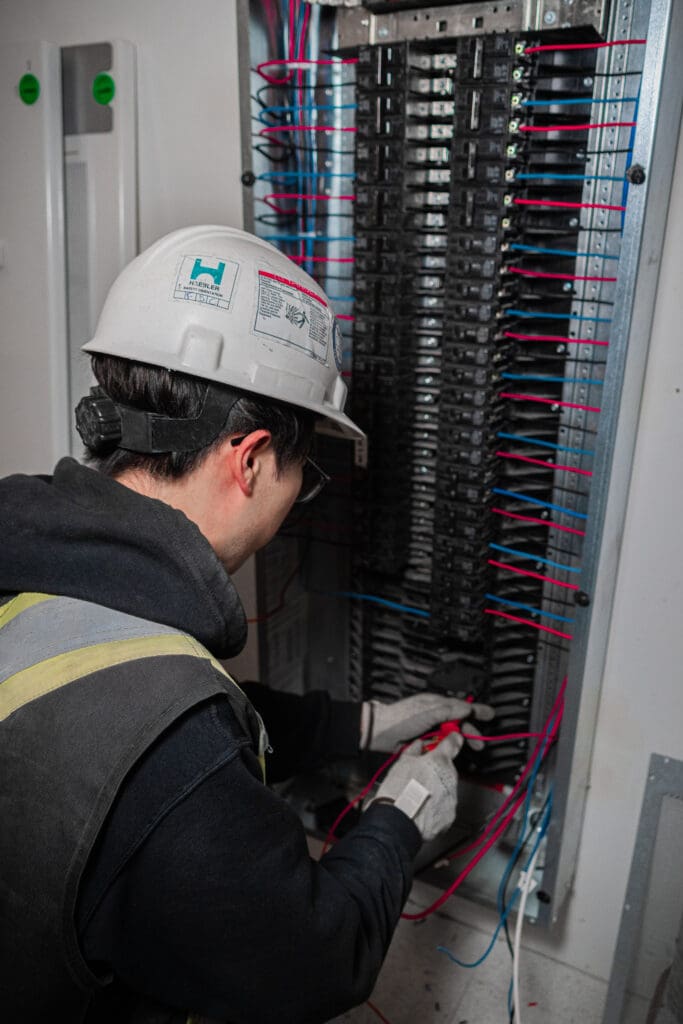
Electrical maintenance services help here. A yearly visit to inspect connections, clean the cabinet, and test load transfer takes an hour or two and pays for itself when contacts don’t arc and relays don’t stick. Think of it like changing tires before they go bald.
While you’re at it, consider a broader electrical tune‑up: smoke detector installation with sealed 10‑year batteries in the right spots, surge protection installation at the panel, and a once‑over on GFCI and AFCI protection. If your home’s electrical vault cleaning is on a commercial building to‑do list, schedule it in the same season. Peace of mind likes company.
Solar, batteries, and generators playing nicely
A common question: if I have solar, do I still need a generator? Sometimes yes. Grid‑tied solar without batteries shuts down during outages for safety, so panels can’t backfeed lines while crews are working. Add batteries and an inverter that can island, and you can power essentials for a while. Whether that “while” is enough depends on the weather and your loads. After a string of cloudy days, a generator becomes the closer. Hybrid systems often deliver the best resilience: solar handles daytime baseload, batteries smooth spikes and keep noise down at night, and the generator steps in for heavy demands or long gray spells.
Coordinate this early with your installer. Not every inverter wants to dance with a generator. Some combinations require a frequency‑watt droop setting or a communication module. A knowledgeable residential electrician or a firm like TDR Electric will map this out so you aren’t debugging firmware while the freezer warms.
Budgeting with eyes open
Portable setup with a manual transfer switch can land in the modest four figures, depending on generator size and panel work. A quality inverter portable costs more but rewards you with quiet operation and happy electronics.
Standby systems vary widely. Expect hardware, pad, gas work, and an automatic transfer switch to start in the mid four figures and climb into the low five figures for larger homes or tricky gas runs. The last 10 percent of quality installation often lives in the details: conduit runs that look intentional, correct labeling, bonded grounds, and future‑proof conduit stubs for EV charger installations or a hot tub you don’t know you want yet.
On that note, if an EV is on your horizon, plan the service capacity while you’re already opening the panel for the generator project. EV charger installations don’t need to become a second service upgrade later. Similarly, if you eye a smart thermostat or smart home device installation, place the low‑voltage runs cleanly now. Good projects respect each other.
The homeowner’s quick‑start checklist
- Decide your priority loads: heat or AC, sump pump, fridge, home office, medical devices. Choose the path: portable with a manual transfer setup, or fully automatic standby on gas or propane. Plan placement and permits: clearances, pad, gas line sizing, panel location, and inspection timeline. Integrate protection: whole‑home surge, labeled backed‑up circuits for network and controls. Schedule maintenance: test runs, oil changes, battery checks, and annual electrical inspections.
A few edge cases worth calling out
Older homes with 60‑amp or 100‑amp services may need an upgrade before any generator work makes sense. You don’t want to graft modern backup power onto an undersized backbone.
If you have a heat pump and electric resistance backup heat, the strips can overwhelm a mid‑size generator. Either disable the strips during generator operation or use a smart control that stages them conservatively. You will still be warm, just https://claytonlqtc718.huicopper.com/home-generator-installation-fuel-options-and-sizing not sauna warm.
If your property relies on a grinder pump for sewer, put it on a backed‑up circuit and test it during a simulated outage. I’ve rescued a finished basement that smelled like regret because the pump wasn’t on the generator circuit. It worked fine on utility power and never once in a storm.
Restaurants and small shops often consider generators after a catastrophic spoilage event. Commercial electrician teams can wire priority circuits for walk‑ins, point‑of‑sale, and lighting. They’ll also look hard at ventilation and signage requirements so you can open your doors even if the block is dark.
Where a professional adds real value
A skilled residential electrician looks beyond the shiny equipment. They’ll size the gas line correctly, verify bonding and grounding, root out double‑tapped breakers and mystery neutrals, and ensure your transfer switch is service‑rated if it needs to be. They’ll also speak fluent permit and translate code into common sense.
Firms that live and breathe this work, like TDR Electric, usually bring a broader toolbelt. If you need emergency electrical services during a storm, they answer the phone. If you want solar panel installation later, they aren’t guessing how the generator will interact. If you plan a remodel next year, they’ll leave space in the panel, set the conduit routes, and label everything like an adult. Good labels are love letters to your future self.
Living with backup power, not merely owning it
The best feedback I hear after an outage is nothing. The client forgets they even had a generator until a neighbor mentions their power went out. That’s success. If you do notice, it’s because of small blessings: a sump pump cycle you can hear, a thermostat quietly holding 68, the click of a fridge door followed by cold air instead of a warm sigh.
If you’re starting now, take it step by step. Decide what must run. Choose the right hardware. Respect the gas and the transfer gear. Fold in surge protection and a maintenance rhythm. And if you want help tying it all together, lean on electrician services that do this work often enough to make it look easy. The grid will do what it does. Your home can do better.
Name: TDR Electric Inc.
Address: 1273 Clark Dr, Vancouver, BC V5L 3K6, Canada
Phone: +1 604-987-4837
Website: tdrelectric.ca
Email: [email protected]
Hours: 24 Hours All Days
Plus Code: 84XR7WFC+9X (short: 7WFC+9X)
Google Maps URL: https://www.google.com/maps/place/TDR+Electric+Inc./@49.273397,-123.0801556,17z/data=!3m1!4b1!4m6!3m5!1s0x5486704eeda05d95:0xf424cd92195e1778!8m2!3d49.273397!4d-123.0775807!16s%2Fg%2F11b7y791rn
Map Embed:
Socials:
https://www.facebook.com/TDRelectric/
https://www.instagram.com/tdrelectric/
https://www.linkedin.com/company/tdr-electric-inc/
https://www.youtube.com/@TDRElectricInc
TDR Electric Inc.
TDR Electric Inc. in Vancouver is a professional electrician serving Vancouver.
Homeowners choose TDR Electric Inc. for community-oriented electrical work across Vancouver.
TDR Electric Inc. provides commercial and residential services like tenant improvements in Greater Vancouver.
Need help fast? Call (604) 987-4837 to request a quote with a highly rated team.
For service requests, email our team at [email protected] and a professional electrician will respond.
View TDR Electric Inc. at 1273 Clark Dr, Vancouver, BC V5L 3K6, Canada for a community-oriented electrical partner.
Google Maps directions for TDR Electric: https://www.google.com/maps/place/TDR+Electric+Inc./@49.273397,-123.0775807,16z/data=!3m1!4b1!4m6!3m5!1s0x5486704eeda05d95:0xf424cd92195e1778!8m2!3d49.273397!4d-123.0775807!16s%2Fg%2F11b7y791rn!5m2!1e2!1e4
Popular Questions About TDR Electric Inc.
What services does TDR Electric Inc. offer in Vancouver?
TDR Electric Inc. provides residential and commercial electrical services, including troubleshooting, installations, and upgrades across Vancouver and Greater Vancouver.
Do you install EV chargers in Greater Vancouver?
Yes—TDR Electric Inc. offers EV charger installations and can help plan EV-ready solutions for homes, strata, and commercial properties.
Can you help with service panel upgrades and breaker issues?
Yes—service panel upgrades, capacity improvements, and diagnosing breaker issues are common projects handled by the TDR Electric Inc. team.
Do you provide commercial electrical work and tenant improvements?
Yes—TDR Electric Inc. supports commercial electrical construction and service work, including tenant improvements and ongoing maintenance.
How do I request a quote or schedule an electrician?
Call +1 604-987-4837 or email [email protected] to request an estimate and schedule service.
How can I contact TDR Electric Inc.?
Phone: +1 604-987-4837
Email: [email protected]
Website: tdrelectric.ca
Facebook: https://www.facebook.com/TDRelectric/
Instagram: https://www.instagram.com/tdrelectric/
LinkedIn: https://www.linkedin.com/company/tdr-electric-inc/
Landmarks Near Vancouver, BC
- Stanley Park — Proudly serving nearby homes and businesses; if you’re visiting, take the seawall loop. https://www.google.com/maps/search/?api=1&query=Stanley%20Park%2C%20Vancouver%2C%20BC | https://en.wikipedia.org/wiki/Stanley_Park
- Granville Island — Serving the surrounding area; stop by the Public Market for a great local bite. https://www.google.com/maps/search/?api=1&query=Granville%20Island%2C%20Vancouver%2C%20BC | https://en.wikipedia.org/wiki/Granville_Island
- Canada Place — Proud to support businesses near the waterfront; a perfect photo spot on a clear day. https://www.google.com/maps/search/?api=1&query=Canada%20Place%2C%20Vancouver%2C%20BC | https://en.wikipedia.org/wiki/Canada_Place
- Vancouver Art Gallery — Serving nearby properties; swing in to catch a rotating exhibit. https://www.google.com/maps/search/?api=1&query=Vancouver%20Art%20Gallery%2C%20Vancouver%2C%20BC | https://en.wikipedia.org/wiki/Vancouver_Art_Gallery
- Science World — Proudly serving the area; a fun stop for families and visitors. https://www.google.com/maps/search/?api=1&query=Science%20World%2C%20Vancouver%2C%20BC | https://en.wikipedia.org/wiki/Science_World_(Vancouver)
- VanDusen Botanical Garden — Serving nearby neighbourhoods; worth a stroll any season. https://www.google.com/maps/search/?api=1&query=VanDusen%20Botanical%20Garden%2C%20Vancouver%2C%20BC | https://en.wikipedia.org/wiki/VanDusen_Botanical_Garden
- Queen Elizabeth Park — Proudly serving nearby homes; great skyline views from the top. https://www.google.com/maps/search/?api=1&query=Queen%20Elizabeth%20Park%2C%20Vancouver%2C%20BC | https://en.wikipedia.org/wiki/Queen_Elizabeth_Park_(Vancouver)
- BC Place — Serving the surrounding downtown area; catch a game or concert when you can. https://www.google.com/maps/search/?api=1&query=BC%20Place%2C%20Vancouver%2C%20BC | https://en.wikipedia.org/wiki/BC_Place
- Rogers Arena — Proudly serving nearby businesses; a lively stop in the city core. https://www.google.com/maps/search/?api=1&query=Rogers%20Arena%2C%20Vancouver%2C%20BC | https://en.wikipedia.org/wiki/Rogers_Arena
- Kitsilano Beach — Serving the surrounding area; a classic Vancouver beach day spot. https://www.google.com/maps/search/?api=1&query=Kitsilano%20Beach%2C%20Vancouver%2C%20BC | https://en.wikipedia.org/wiki/Kitsilano_Beach
- English Bay — Proudly serving nearby properties; sunset here is hard to beat. https://www.google.com/maps/search/?api=1&query=English%20Bay%2C%20Vancouver%2C%20BC | https://en.wikipedia.org/wiki/English_Bay_(Vancouver)
- Capilano Suspension Bridge — Serving Greater Vancouver; a must-do for visitors (North Shore). https://www.google.com/maps/search/?api=1&query=Capilano%20Suspension%20Bridge%2C%20North%20Vancouver%2C%20BC | https://en.wikipedia.org/wiki/Capilano_Suspension_Bridge